
Buying property in Austria as a foreigner: the holiday home guide
Can foreigners buy property in Austria? Yes. EU and EEA citizens buy on the same terms as Austrians, while buyers from outside the EU, including the UK and the US, usually need approval from the regional authority. Whether you may use the home as a holiday home depends on the property itself.
Two questions decide most purchases in Austria: whether you need approval to buy, and whether the home may be used as a holiday home at all.
This guide answers both, then walks through the buying steps, the costs on top of the price and what changes for a new-build. It is based on our work in the Arlberg since 2012 and on the official sources listed at the end.
1. Can foreigners buy property in Austria?
Yes. How easy it is depends on your citizenship and on how you will use the home.
EU and EEA citizens
Citizens of the EU and the EEA buy on the same terms as Austrians. They need no approval to buy. The rules on second homes in section 2 still apply to them, as they apply to Austrians.
Swiss citizens
Swiss citizens are treated like EU citizens when they move their main residence to Austria. For a holiday home they are usually treated like other non-EU buyers, and practice differs between the Länder (the nine Austrian states).
British, American and other non-EU buyers
Since Brexit, British buyers count as non-EU buyers, like Americans. A non-EU buyer usually needs approval from the land-transfer authority of the Land (Grundverkehrsbehörde) before the purchase can be entered in the land registry. Some bilateral agreements exempt citizens of certain countries.
Approval is given when the purchase serves a cultural, social or economic interest and raises no objection of state interest. It can be refused, for example when the buyer's intentions are speculative, when money laundering is suspected, or when the buyer wants to use agricultural or forest land for something else.
PURE's advice: if you are not an EU or EEA citizen, ask about approval for the specific property before you sign an offer. Some Länder rarely approve a holiday home for a non-EU buyer.
2. Can you buy an Austrian holiday home without renting it out?
Yes, but only a home that has the legal status to be used as a holiday home. In Tyrol and Salzburg that status goes with the property, whoever buys it; Vorarlberg has an exception, explained below. A home without the status may only be someone's main residence.
The status has a different name in each Land: Freizeitwohnsitz in Tyrol, Ferienwohnung in Vorarlberg and Zweitwohnung in Salzburg. In English it is usually called second-home status, or Zweitwohnsitz.
Most new apartments in the big ski resorts have no second-home status. Developers sell them as investor apartments: a hotel operator lets the apartment to guests, and the owner may stay in it only as a guest, for the weeks the operator agrees to. That arrangement is what a rental obligation means. It is legal, and it suits some buyers, but you cannot use the home whenever you like.
A home with second-home status has no such obligation. You may use it all year and leave it empty when you are away. These homes are rare in the Alpine villages, and they are an important part of what we sell.
Tyrol
Since 2023, new Freizeitwohnsitze are banned in about 140 Tyrolean municipalities. Elsewhere a municipality may only zone new ones while they make up less than 8% of its homes. In the municipalities with the ban, almost every buyer has to declare that they will not use the home as a holiday home. Illegal use can be fined up to €40,000.
Vorarlberg
A holiday home in Vorarlberg needs land zoned for Ferienwohnungen or a permit from the municipality. A permit is personal: it covers the person it was given to and close relatives, so a buyer cannot rely on the seller's permit. Illegal use is fined.
Salzburg
A municipality where more than 16% of homes are not main residences restricts second homes by law. Most municipalities in the Land do, and there a Zweitwohnung is, as a rule, allowed only in designated areas. Illegal use is fined.
PURE's advice: before you sign, ask for written proof of the home's status: the zoning or the municipality's confirmation that it may be used as a holiday home. A seller's word or a line in a brochure is not enough.

3. How to buy property in Austria: step by step
From the purchase contract until you are registered as the owner, a trustee holds your money.
Step 1: Check whether you need approval
Non-EU buyers apply for land-transfer approval (section 1). Your notary or lawyer can tell you early what the Land will ask for.
Step 2: Find the property and check its status
Check the second-home status (section 2), the land register extract (Grundbuchauszug), which shows the owner, mortgages and rights of way, and the running costs of the building.
Step 3: Make an offer to purchase
The agent writes up a formal offer to purchase (Kaufanbot) with the price and the terms agreed with the seller. It binds you for the period it states, and once the seller accepts it unchanged, the sale is agreed. The one-week right to withdraw that Austrian law gives in some cases applies only when you sign on the day of the first viewing and the home is meant for your own urgent housing need, so not to a holiday home.
Step 4: Sign the purchase contract
A notary or lawyer writes the purchase contract (Kaufvertrag). Both signatures are certified by a notary or a court. You pay the price into the trust account of the notary or lawyer (Treuhandkonto). When a notary holds it, the deposit is recorded in the notaries' trust register.
Step 5: Tax, approval and the land registry
The notary or lawyer works out and pays the transfer tax. Once any approval is in place, they apply for your entry in the land registry (Grundbuch). You become the owner with that entry, and only then is the price paid out to the seller.
4. How much does it cost to buy property in Austria?
The taxes and fees on top of the price are set by law and are the same across Austria. The fees of the notary or lawyer and of the agent vary.
Purchase cost | Rate | Note |
|---|---|---|
Real estate transfer tax (Grunderwerbsteuer) | 3.5% of the price | Paid through the notary or lawyer |
Land registry entry (Eintragungsgebühr) | 1.1% of the price | Plus a small filing fee |
Notary or lawyer, contract and trustee | About 1–3% of the price, plus 20% VAT | Some charge a fixed fee |
Estate agent's commission | Up to 3% of the price, plus 20% VAT | The legal maximum for each party; on some new-builds the developer pays it |
Mortgage registration (Pfandrechtseintragungsgebühr) | 1.2% of the registered mortgage | Only when you borrow |
Without a mortgage, the costs come to roughly 6–8% of the price without an agent's commission, and 9–12% with one.
A temporary exemption from the land registry fee for main residences ended on 30 June 2026. It never applied to holiday homes.
Example: a €1 million holiday apartment
Cost | Amount |
|---|---|
Transfer tax, 3.5% | €35,000 |
Land registry entry, 1.1% | €11,000 |
Notary or lawyer, 1.5% plus VAT | €18,000 |
Agent's commission, 3% plus VAT | €36,000 |
Total on top of the price | €100,000 |
Without the agent's commission the total is €64,000. Ask the notary or lawyer for an estimate for your purchase before you sign the offer.
5. Can foreigners get a mortgage in Austria?
Yes. Austrian banks lend to foreign buyers, though they look closely at income earned abroad and often ask non-residents for a larger deposit.
A variable rate is the 3-month Euribor plus the bank's margin. Fixed rates for 10 years or longer are common too. The strict national lending rules (KIM-Verordnung) ended on 30 June 2025. The financial regulator now expects banks to keep to a loan of at most 90% of the value, repayments of at most 40% of net income and a term of at most 35 years, but banks may make exceptions.
Remember the costs that come with a loan: the 1.2% fee to register the mortgage, and the bank's own set-up and valuation fees. Rates change often, so ask the bank for an offer with the full cost of the loan.
6. Buying a new-build or off-plan property in Austria
A new-build bought from a developer is protected by the Bauträgervertragsgesetz (BTVG), the act on developer contracts. You do not pay the full price up front. Most contracts follow the act's instalment plan (Ratenplan A):
- 15% when building starts, with a final building permit
- 35% when the shell and the roof are finished
- 20% when the plumbing and electrics are in
- 12% when the façade and the windows are finished
- 12% when the home is ready to move into
- 4% when the whole development is finished
- 2% three years after handover, unless the developer gives a bank guarantee or insurance instead
The trustee pays each instalment to the developer only after an independent expert confirms the stage is complete.
The developer must send you the draft contract at least a week before you sign. If not, the BTVG gives you 14 days to withdraw, also for a holiday home.
Warranty on a new-build
The statutory warranty on a building runs for three years from handover. The last 2% of the price, held back for those three years, is your security for it.
7. Can you rent out a holiday home in Austria?
That depends on the home's status. An investor apartment is let through its operator, under the operator's contract. A home with second-home status is yours to use, but letting it to tourists may need a permit or be restricted by the Land and the municipality. Salzburg fines illegal tourist letting.
Rental income is taxable in Austria, and costs such as mortgage interest can be set against it. Take tax advice for your own situation.
8. Annual property taxes and running costs
Owners pay:
- property tax (Grundsteuer), set by the municipality. It is low, usually a few hundred euros a year.
- a second-home levy in many places. In Tyrol each municipality sets its Freizeitwohnsitzabgabe by floor area, and Vorarlberg and Salzburg have similar levies.
- the running costs of the building and, in an apartment building, payments into its repair fund.
Austria has charged no inheritance or gift tax since 2008, though transfer tax is due when a property is inherited or given.
Capital gains tax
When you sell, the gain is taxed at 30% (Immobilienertragsteuer). The exemption for a main residence does not cover a holiday home.
9. What should foreign buyers check before buying?
- Written proof of the home's second-home status
- Whether you need land-transfer approval, and how long it takes in that Land
- The land register extract: owner, mortgages and rights of way
- Any rental contract with an operator: how many weeks you may use the home, the costs and how long it runs
- The running costs and the repair fund of the building
- For a new-build: the building permit, the BTVG instalment plan and who holds the trust account
- The full cost of the purchase, from the notary or lawyer, in writing
10. Frequently asked questions
Can foreigners buy property in Austria?
Yes. EU and EEA citizens buy on the same terms as Austrians. Non-EU buyers, including British and American buyers, usually need approval from the Land.
What does second-home status (Zweitwohnsitz) mean?
That the home may legally be used as a holiday home. Without it, a home may only be someone's main residence or be let through an operator.
Is there stamp duty in Austria?
Not under that name. The buyer pays a real estate transfer tax of 3.5% and a land registry fee of 1.1%.
Who pays the estate agent?
It depends on the agreement. The law caps the commission at 3% of the price plus VAT for each party. On some new-builds the developer pays it.
Is there an annual property tax?
Yes, a low municipal property tax (Grundsteuer), and in many places a second-home levy.
Does buying property give me residency in Austria?
No. Owning a home in Austria gives no right to live there. Residence rules are separate.
11. Buying property in Austria with PURE International
We have worked in the Arlberg since 2012. We help you find a home that fits how you want to use it, check its status and costs with you, and stay involved throughout the purchase, up to completion.
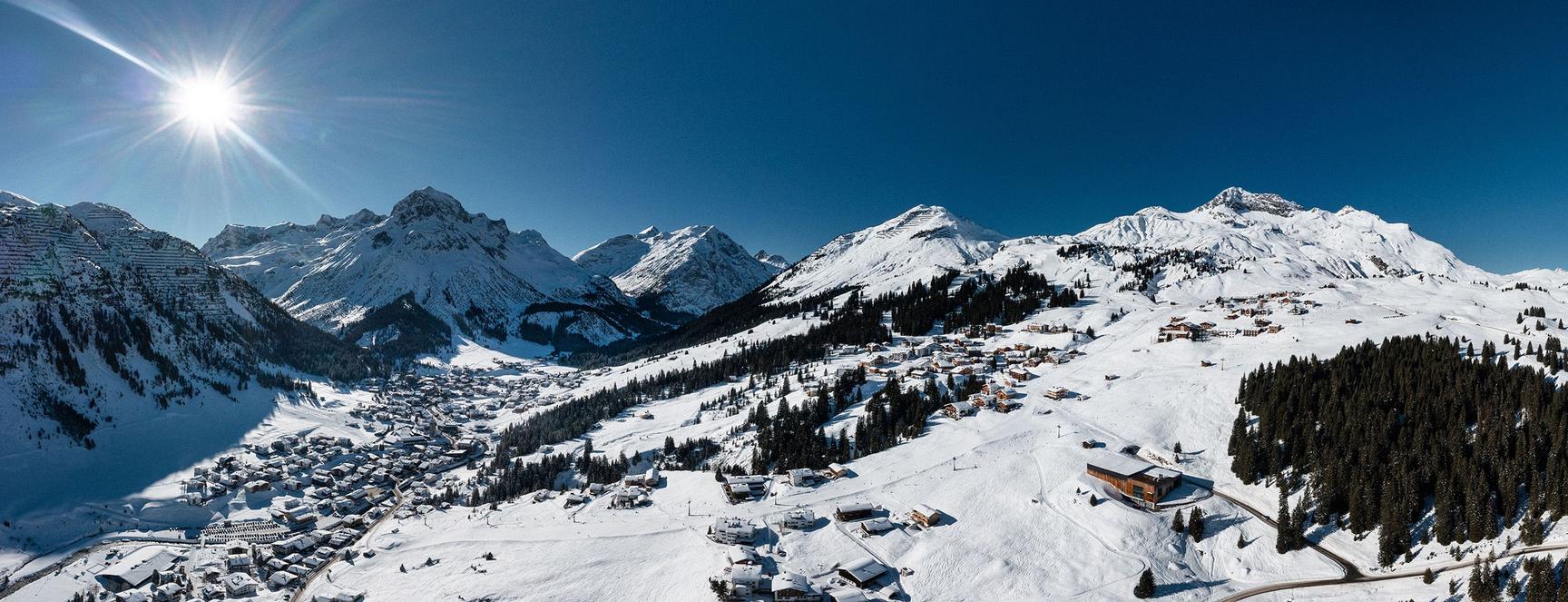
Exceptional Luxury Chalet in Oberlech
- 5 beds
- Price on request
A Ski-in/ Ski-out Alpine Retreat in One of Austria's Most Prestigious Ski Destinations
- Prime ski-in, ski-out location
- Wellness, sauna, hamman, gym
- Entertainment & cinema area
1 more
Oberlech, Austria

Exclusive Off-Market Properties in the Arlberg
- 1-4 beds
- 1-3 baths
- 58-250 sqm
- €1,450,000 - €5,500,000
Rare Second-Home Opportunities in Lech, Zürs, Stuben & Wald am Arlberg
- No rental obligation
- Ready-to-use properties & refurbishment opportunities
- Lech, Zurs and Stuben
Lech, Zuers, Stuben, Austria
About this guide
Information reviewed for October 2026. This guide is general information, not legal or tax advice. The rules differ between the Länder and change often, so check your own purchase with a notary or lawyer before you sign.
Sources: Purchase costs (oesterreich.gv.at), Buying as a foreign national (oesterreich.gv.at), Freizeitwohnsitze in Tyrol (tirol.gv.at), Instalment plan, BTVG § 10, End of the KIM-Verordnung (FMA).
Related guides
- Buyer’s guide
Buying property in Italy as a foreigner: the complete guide
Who can buy, second-home rules in South Tyrol, purchase taxes, mortgages and renting out: what foreign buyers need to know before buying a holiday home in Italy.
 Paul Kleinekorte
- Buyer’s guide
Buying property in Switzerland as a foreigner: the holiday home guide
Lex Koller, the second-home rules, buying costs, mortgages and renting out: what foreign buyers need to know before buying a holiday home in Switzerland.
Paul Kleinekorte