
Buying property in Italy as a foreigner: the complete guide
Can foreigners buy property in Italy? Yes. EU citizens buy on the same terms as Italians, and most other buyers, including Americans, can buy under reciprocity. In most of Italy you may also own a holiday home without having to rent it out.
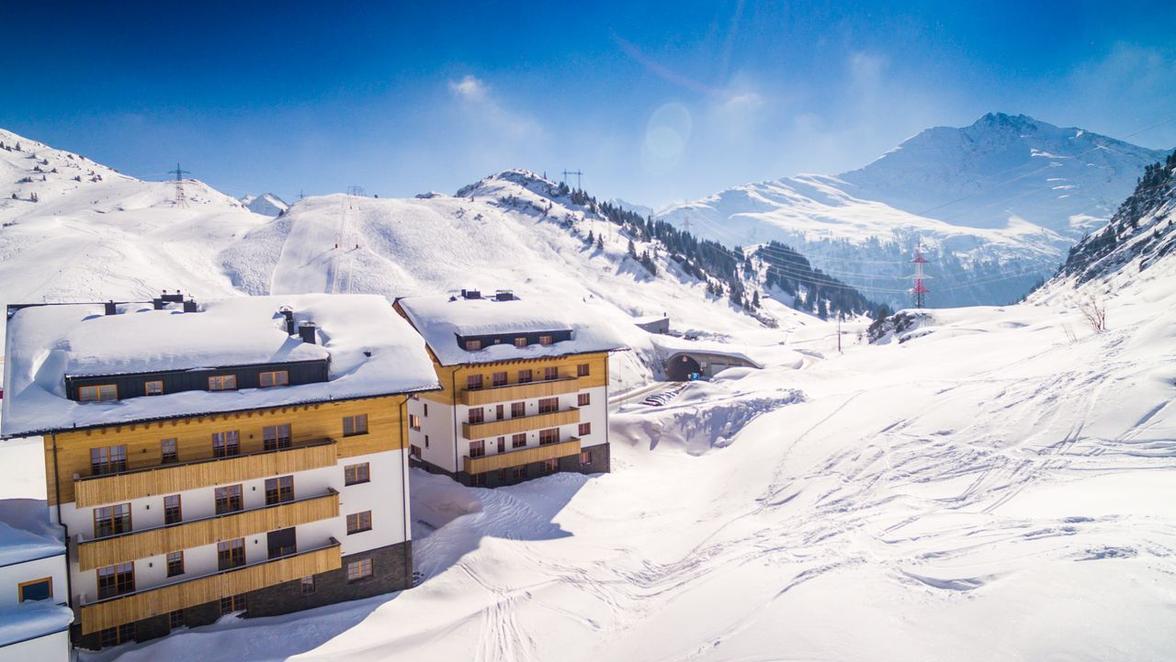
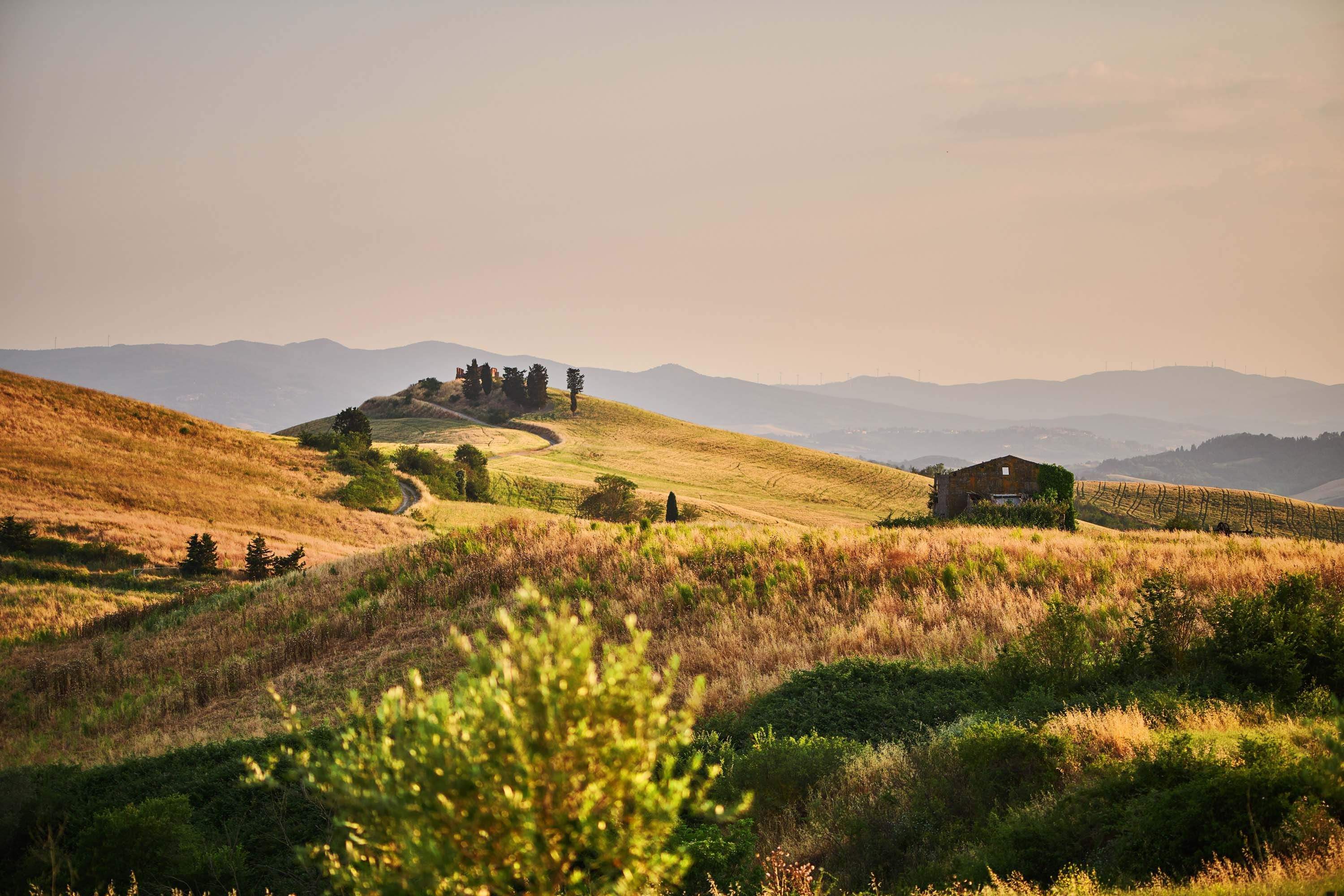
The market ranges from ski apartments and Alpine chalets to farmhouses, country villas and historic estates. Our own Italian homes are in the countryside of Le Marche, Umbria and Tuscany.
Unlike many Austrian and Swiss ski resorts, much of Italy allows private holiday-home ownership without mandatory rental obligations. Nevertheless, some Alpine regions, particularly South Tyrol, have specific restrictions on second-home use.
This guide brings together our market knowledge and publicly available Italian legal information to help international buyers understand the purchasing process.
1. Can foreigners buy property in Italy?
Yes. Italy generally permits foreign nationals to purchase residential property.
However, eligibility depends on nationality, residency and applicable international agreements.
EU citizens
Citizens of European Union countries can generally buy Italian property under the same conditions as Italian nationals.
Dutch, German, Belgian and other EU buyers can purchase a holiday home without special foreign-buyer approval.
British buyers after Brexit
British citizens are now treated as non-EU nationals for many Italian legal purposes.
They can still buy: the UK lets Italian citizens buy property, so British buyers meet the reciprocity condition.
The Italian notary checks this before the deed.
American and other non-EU buyers
US, Canadian, Australian and other non-EU citizens may be able to purchase Italian property under reciprocity arrangements or relevant exemptions.
Reciprocity means that Italy lets a foreigner buy property if the foreigner's own country lets Italians buy there (Ministry of Foreign Affairs). Holders of certain Italian residence permits are exempt from the check, and US citizens can buy under a bilateral treaty.
The position varies according to nationality and personal circumstances.
Does buying property give you Italian residency?
No. Purchasing a property does not automatically grant residency or immigration rights.
Non-EU buyers must comply with the applicable visa and residence requirements.
2. Can you buy a holiday home in Italy without renting it out?
In many parts of Italy, yes.
A legally authorised residential property can generally be purchased and used as a private second home without any obligation to rent it out.
This is an important distinction from certain Alpine destinations in Austria and Switzerland.
However, Italy is not completely uniform. Local planning regulations and specific restrictions can affect the use of individual properties.
Primary residence versus second home
Italian property taxation distinguishes between qualifying first-home purchases (prima casa) and other residential property.
A buyer purchasing a holiday home will commonly fall under the second-home tax regime.
Property type | Private holiday use | Main consideration |
|---|---|---|
Qualifying prima casa | Depends on actual use and eligibility | Preferential purchase taxes |
Second home (seconda casa) | Generally permitted | Standard acquisition and ownership taxes |
Restricted residential property | Subject to specific local conditions | Verify planning designation |
Tourist accommodation | Depends on permitted use | Rental and operating regulations |
PURE's advice: Always confirm the property's legal use before signing. The fact that an apartment is marketed as a holiday home does not guarantee that unrestricted second-home use is permitted.
3. Buying property in the Dolomites and South Tyrol
Popular locations include Cortina d'Ampezzo, Alta Badia, Val Gardena, Alpe di Siusi, Madonna di Campiglio and San Candido.
Are second homes allowed in South Tyrol?
South Tyrol has special housing and planning regulations designed to protect residential accommodation for the local population.
Under the provincial planning law of 2018, new homes in residential zones are largely reserved for residents (Wohnungen für Ansässige): people who have lived in South Tyrol for five years, or who work there. Since a housing reform in June 2025 (provincial law no. 6 of 2025), this applies to all or most new residential volume, depending on the municipality. A home bound this way may not be used as a holiday home, and using it for tourism can be fined €30,000.
In practice, a holiday home in South Tyrol is usually an existing home without that obligation.
Such restrictions may prevent a property from being purchased or used as an unrestricted holiday home.
The applicable designation should be verified through the relevant planning documents, property records and local legal advisers.
Why the property's designation matters
Two apartments in the same village can have very different legal conditions.
One may be available for unrestricted private holiday use, while another may be subject to local occupancy requirements.
This can affect both the property's suitability and its future resale market.
For international buyers interested in South Tyrol, establishing the legal status of a property should be one of the first steps in the search.
4. Where are the best places to buy a holiday home in Italy?
The right destination depends on whether your priority is skiing, summer activities, accessibility, rental income or personal use.
Cortina d'Ampezzo
Cortina is one of Italy's most prestigious mountain resorts, combining extensive skiing with luxury hospitality, shopping and outstanding Dolomite scenery.
It is particularly attractive to buyers looking for a traditional yet sophisticated Alpine destination.
Alta Badia and Val Gardena
These neighbouring Dolomite regions offer excellent access to the Dolomiti Superski network.
Traditional villages, high-quality restaurants and spectacular mountain scenery create strong year-round appeal.
Property-use restrictions require particular attention in parts of South Tyrol.
Courmayeur and Cervinia
Located in the Aosta Valley, these destinations offer dramatic Alpine scenery and internationally recognised skiing.
Courmayeur sits beneath Mont Blanc, while Cervinia provides high-altitude skiing with connections to Zermatt.
Lake Como
Lake Como is an established destination for luxury second-home buyers.
Its elegant villas, historic towns and proximity to Milan make it attractive for both seasonal and extended stays.
Lake Garda
Lake Garda offers a combination of water sports, golf, cycling, hiking and attractive lakeside towns.
It is particularly appealing to buyers seeking a property that can be enjoyed across several seasons.
Le Marche
Le Marche lies between the Apennines and the Adriatic, east of Umbria and Tuscany. Its hill villages, farmland and coast are quieter and often less expensive than the better-known regions next door. The nearest airport is Ancona.
We sell restored farmhouses here, such as Il Marchegiano and Loro Piceno, near the Adriatic coast.
Umbria
Umbria is the green, landlocked region between Tuscany and Le Marche, known for its medieval hill towns, olive groves and quiet countryside.
Podere Sassone, a new four-bedroom country villa in Rotecastello, is one of our homes here.
Tuscany
Tuscany combines world-famous towns and wine regions with large rural estates, from the Sienese hills to the Maremma near the coast.
Our Tuscan homes include Castello di Casole, a historic estate of 4,200 acres near Siena, and La Maremma, a farmhouse restored in 2016.
PURE's advice: with a farmhouse or an estate, check the land as carefully as the house. Section 12 lists what to look at.
5. How to buy property in Italy: Step by step
The Italian purchasing process is well established, but differs from procedures in the UK, Netherlands and several other European countries.
A notary (notaio) plays a central role, while independent legal and technical advisers can provide additional protection.
Step 1: Obtain a Codice Fiscale
Foreign buyers generally require an Italian tax identification number, known as a Codice Fiscale.
This is needed for the purchase and many related financial transactions.
Step 2: Find and evaluate the property
Once you have identified a suitable property, confirm its location, legal designation, building condition and expected running costs.
For Alpine properties, pay particular attention to access, parking, maintenance and any local second-home restrictions.
Step 3: Submit a purchase proposal
The buyer may submit a written offer, known as a proposta d'acquisto.
This sets out the proposed price, conditions and timetable.
An accepted proposal can create legally binding obligations, so the wording should be reviewed before signing.
Step 4: Sign the preliminary contract
The preliminary purchase agreement is commonly called the compromesso.
It records the agreed transaction terms and the parties' obligations.
Buyers often pay a deposit, commonly around 10–20%, although the amount is negotiable.
Where the deposit is structured as a caparra confirmatoria, specific legal consequences apply if either party defaults.
Step 5: Complete due diligence
Before completion, the relevant professionals should verify:
- Legal ownership.
- Land Registry and cadastral records.
- Planning and building permits.
- Property boundaries and floor plans.
- Registered mortgages and other charges.
- Condominium documents.
- Any restrictions on holiday-home use.
- Outstanding taxes or communal charges.
Step 6: Sign the final deed
The purchase is completed by signing the final notarial deed, known as the rogito notarile.
The remaining purchase price and applicable taxes are paid, and the notary arranges the necessary registrations.
6. How much does it cost to buy property in Italy?
Italian property purchase costs depend on the seller, the property's classification and whether the buyer qualifies for first-home tax benefits.
For international buyers purchasing a holiday home, the second-home tax regime is particularly relevant.
Buying an existing property from a private seller
The standard taxes generally include:
Tax | Standard treatment |
|---|---|
Registration tax | 9% of the applicable taxable value |
Mortgage tax | €50 |
Cadastral tax | €50 |
The registration tax is at least €1,000. A buyer who moves their residence to the comune may qualify for the first-home rate of 2%, which a holiday-home buyer usually cannot use.
For qualifying purchases by private individuals, the registration tax may be calculated on the property's cadastral value under the prezzo-valore system.
The cadastral value can be significantly lower than the actual purchase price.
Buying a new-build property from a developer
Where the sale is subject to VAT, the standard treatment for a second home is generally:
Tax | Standard treatment |
|---|---|
VAT on qualifying non-luxury residential property | 10% |
VAT on certain legally classified luxury residential property | 22% |
Registration tax | €200 |
Mortgage tax | €200 |
Cadastral tax | €200 |
The applicable VAT treatment depends on the seller, property classification and transaction. Luxury means the cadastral categories A/1, A/8 and A/9.
Rates checked October 2026 against the Agenzia delle Entrate.
Additional purchase costs
Buyers should also budget for estate agent commission, notary fees, independent legal advice, technical surveys and mortgage-related expenses.
Estate agent commission is negotiable and may be payable by both buyer and seller.
Example: Purchasing a €1 million second home
Consider an existing property purchased from a private seller for €1 million, with an applicable cadastral value of €350,000.
Item | Amount |
|---|---|
Purchase price | €1,000,000 |
Registration tax: 9% of €350,000 | €31,500 |
Mortgage and cadastral taxes | €100 |
Agent commission: 3% plus VAT | €36,600 |
Notary and other professional fees | Additional |
Subtotal before professional fees | €1,068,200 |
This example assumes that the transaction qualifies for the prezzo-valore regime. Actual costs must be calculated for the individual property.
7. Can foreigners get a mortgage in Italy?
Yes. Italian banks may provide mortgage financing to qualifying foreign buyers, including non-residents.
However, lending criteria can be stricter for second homes and applicants living abroad.
Financing of approximately 50–70% of the property's value may be available, depending on the lender and applicant.
Banks typically assess income, assets, existing debts, residency status and the property's valuation.
Fixed and variable mortgages
Italian mortgages are available with fixed or variable interest rates.
Variable mortgages are commonly linked to Euribor plus a lender's margin.
Buyers should compare financing options and obtain a preliminary assessment before entering into a binding purchase agreement.
8. Buying a new-build property in Italy
In Alpine destinations, developments may include underground parking, ski storage, wellness facilities and terraces with mountain views.
Off-plan contracts and payments
Off-plan purchases often involve a preliminary contract and stage payments linked to construction progress.
The contract should clearly identify the property, agreed specifications, payment arrangements and expected completion date.
Buyer protection
For qualifying purchases of properties under construction, Italian law provides safeguards that can include:
- A bank or insurance guarantee covering qualifying advance payments.
- A ten-year insurance policy covering specified serious construction defects.
- Specific requirements for the preliminary purchase agreement.
Buyers should ensure that the protections required for their transaction are in place before making substantial payments.
Construction warranties
Italian law provides remedies for construction defects, including special protections for certain serious defects that become apparent within ten years of completion.
The relevant notification and limitation periods should be checked with an Italian legal adviser.
9. Can you rent out a holiday home in Italy?
In many cases, yes.
Holiday rentals can be attractive in destinations such as the Dolomites, Lake Como and Lake Garda, where visitor demand extends beyond the winter season.
However, short-term rentals are subject to national, regional and local regulations.
CIN registration
Qualifying tourist rental properties generally require a national identification code, known as the Codice Identificativo Nazionale (CIN).
Additional regional registrations and guest-reporting obligations may apply.
Before renting out a property, check:
- Whether tourist rental use is legally permitted.
- National and regional registration requirements.
- Condominium restrictions.
- Safety requirements.
- Guest identification and reporting obligations.
- Applicable rental income taxes.
Rental income tax
Rental income from Italian property is generally taxable in Italy.
Certain individual landlords may qualify for the cedolare secca flat-tax regime, while other arrangements fall under ordinary income tax or business taxation.
The cedolare secca rate is 21%, or 10% on leases at agreed, controlled rents (canone concordato). For short holiday lets, 21% applies to one property of your choice and 26% to a second one. From 2026 the regime covers short lets of up to two apartments; letting three or more counts as a business (Agenzia delle Entrate).
The applicable treatment depends on the rental activity and individual circumstances.
10. Annual property taxes and running costs
Owning a second home in Italy involves ongoing expenses.
IMU: Municipal property tax
Second homes are generally subject to Imposta Municipale Propria (IMU).
The amount depends on the property's cadastral value, classification and municipality.
TARI: Waste collection tax
TARI is the municipal waste collection charge.
The calculation varies according to local rules and property characteristics.
Other running costs
Owners should budget for condominium charges, building insurance, heating, electricity, maintenance and repairs, gardening and pool maintenance where relevant, and contributions to communal building works.
For Alpine apartments, it is particularly important to review the building's maintenance reserve and any planned major works.
11. Capital gains tax when selling Italian property
Capital gains on privately owned Italian real estate may be taxable if the property is sold within five years of acquisition, subject to applicable exemptions.
For many ordinary residential properties held for more than five years, the gain is generally outside the standard private real estate capital gains charge.
However, special rules apply in certain circumstances, including some properties affected by subsidised renovation works.
International buyers should consider both Italian tax rules and the rules of their country of tax residence.
12. What to check before buying a holiday home in Italy
Before signing a binding agreement, confirm:
- Your eligibility to purchase the property.
- The property's authorised residential use.
- Any local second-home restrictions.
- Planning and building compliance.
- The accuracy of cadastral records.
- Whether registration tax or VAT applies.
- The total purchase costs.
- The building's condition and maintenance requirements.
- Whether holiday rentals are permitted.
- Any restrictions or tax consequences affecting resale.
What should I check before buying a farmhouse in Italy?
A rural property needs a few extra checks:
- Agricultural pre-emption (*prelazione agraria*). A tenant farmer, or a farmer who owns neighbouring land, may have the right to buy farmland before you. If they were not offered it, they can claim it within a year of the deed's registration.
- Cadastral and planning conformity. The deed must state that the cadastral plans match the building as it is, and give the permits for it. Without them the deed is void. Extensions, pools and outbuildings without permits are a common problem.
- Energy certificate (APE). It must be attached to the deed.
- Access, water and drainage. Check rights of way over neighbouring land, the water supply, and that a septic system off the mains has its authorisation.
13. Frequently asked questions
Can foreigners buy property in Italy?
Yes. EU citizens can generally buy freely, while non-EU buyers may need to satisfy reciprocity requirements or qualify under an applicable exemption.
Can British citizens buy property in Italy after Brexit?
Yes. The UK lets Italian citizens buy property, so British buyers meet the reciprocity condition, which the notary checks before the deed.
Can Americans buy a holiday home in Italy?
Yes. A bilateral treaty lets US citizens buy property in Italy.
Can I buy a second home in the Dolomites?
Yes, but specific restrictions apply in some Alpine municipalities, particularly in South Tyrol. The individual property's designation must be checked.
Can I use my Italian holiday home whenever I want?
Generally yes, where the property is legally authorised for unrestricted residential second-home use.
How much are purchase taxes in Italy?
They depend on the type of seller, the property's classification and the applicable tax regime. Existing properties and new-build purchases can have substantially different tax treatments.
Can I rent out my holiday home in Italy?
Usually, where local regulations and the property's permitted use allow it. Registration, safety and tax requirements may apply.
Does buying property give me residency in Italy?
No. Property ownership does not automatically grant residence rights.
Do I pay capital gains tax when selling?
Possibly. The treatment depends on the ownership period, property history and applicable exemptions.
14. Buying property in Italy with PURE International
PURE International combines more than 20 years of international property experience with a network of local property professionals. We help buyers identify suitable homes and understand what is involved in buying in Italy.
Whether you are looking for a farmhouse in Le Marche, a villa in Umbria or an estate in Tuscany, we would be happy to discuss your requirements.
Contact PURE International to explore holiday homes and investment opportunities in Italy.
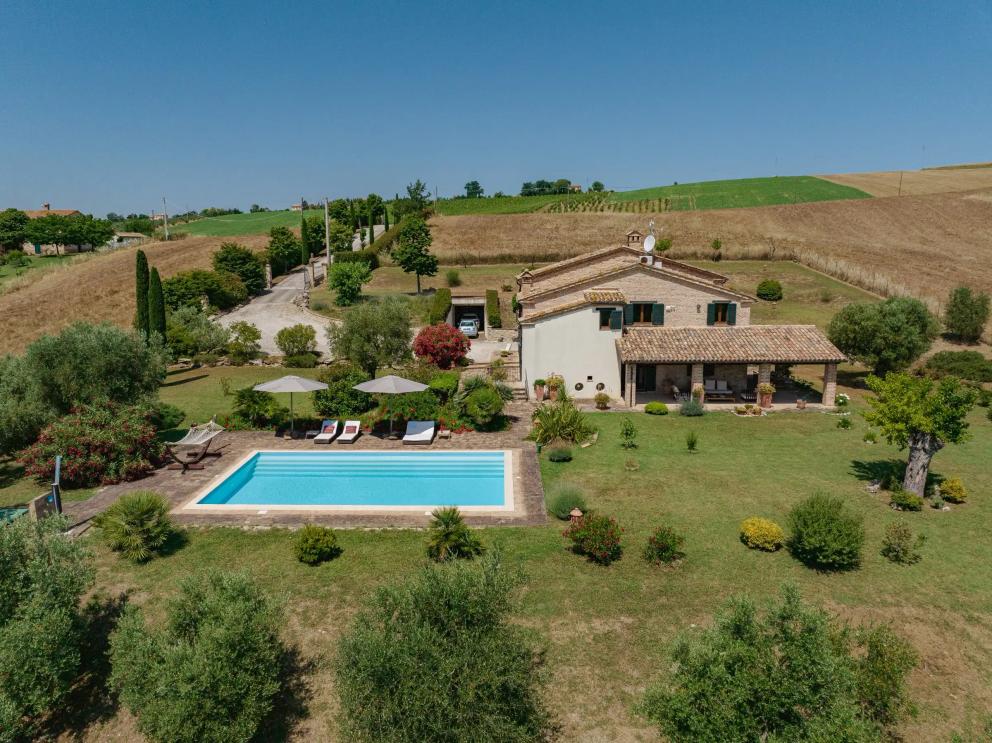
Il Marchegiano
- 5 beds
- €1,290,000
Il Marchegiano is a beautifully renovated traditional farmhouse in the heart of Le Marche, Italy, offering both charm and comfort.
- Private pool
- Air conditioning
- Central heating
2 more
Le Marche, Adriatic Coast, Italy
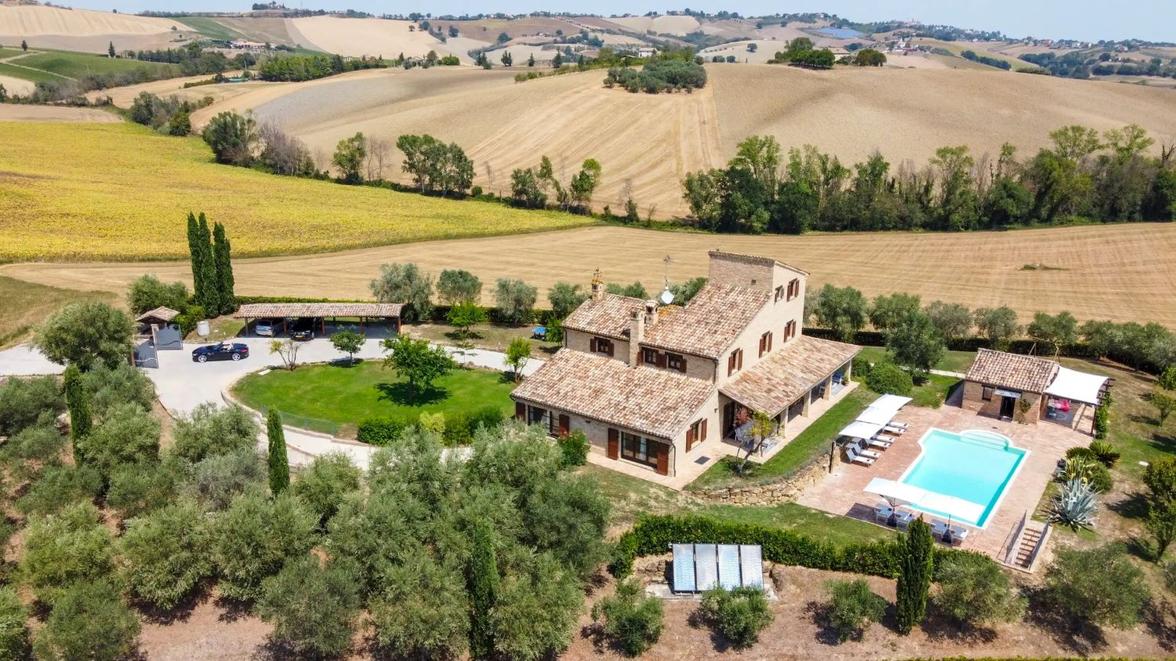
Loro Piceno
- 7 beds
- €1,700,000
Nestled in the tranquil hills of Le Marche, just 30 minutes from the Adriatic coast, Loro Piceno offers the perfect blend of Italian countryside charm and sophisticated living.
- Authentic Italian Elegance
- Sustainable & Smart Living
- Infinity pool
3 more
Macerata, Le Marche, Italy
About this guide
This guide brings together our market knowledge, our relationships with local property professionals and legal specialists, and publicly available Italian legal information.
Sources: Agenzia delle Entrate, Ministry of Foreign Affairs on reciprocity, Law 590/1965 on agricultural pre-emption.
Last updated: October 2026.
This guide is for general information and does not constitute legal or tax advice. Regulations vary by region, municipality, property and buyer status. Independent professional advice should be obtained before purchasing.
Related guides
- Buyer’s guide
Buying property in Switzerland as a foreigner: the holiday home guide
Lex Koller, the second-home rules, buying costs, mortgages and renting out: what foreign buyers need to know before buying a holiday home in Switzerland.
 Paul Kleinekorte
- Buyer’s guide
Buying property in Austria as a foreigner: the holiday home guide
Who may buy, second-home status, purchase costs, mortgages and new-builds: what foreign buyers need to know before buying a holiday home in Austria.
Paul Kleinekorte